Describe, Instruct, or Act: Which Agentic Discovery Standard Do You Actually Need
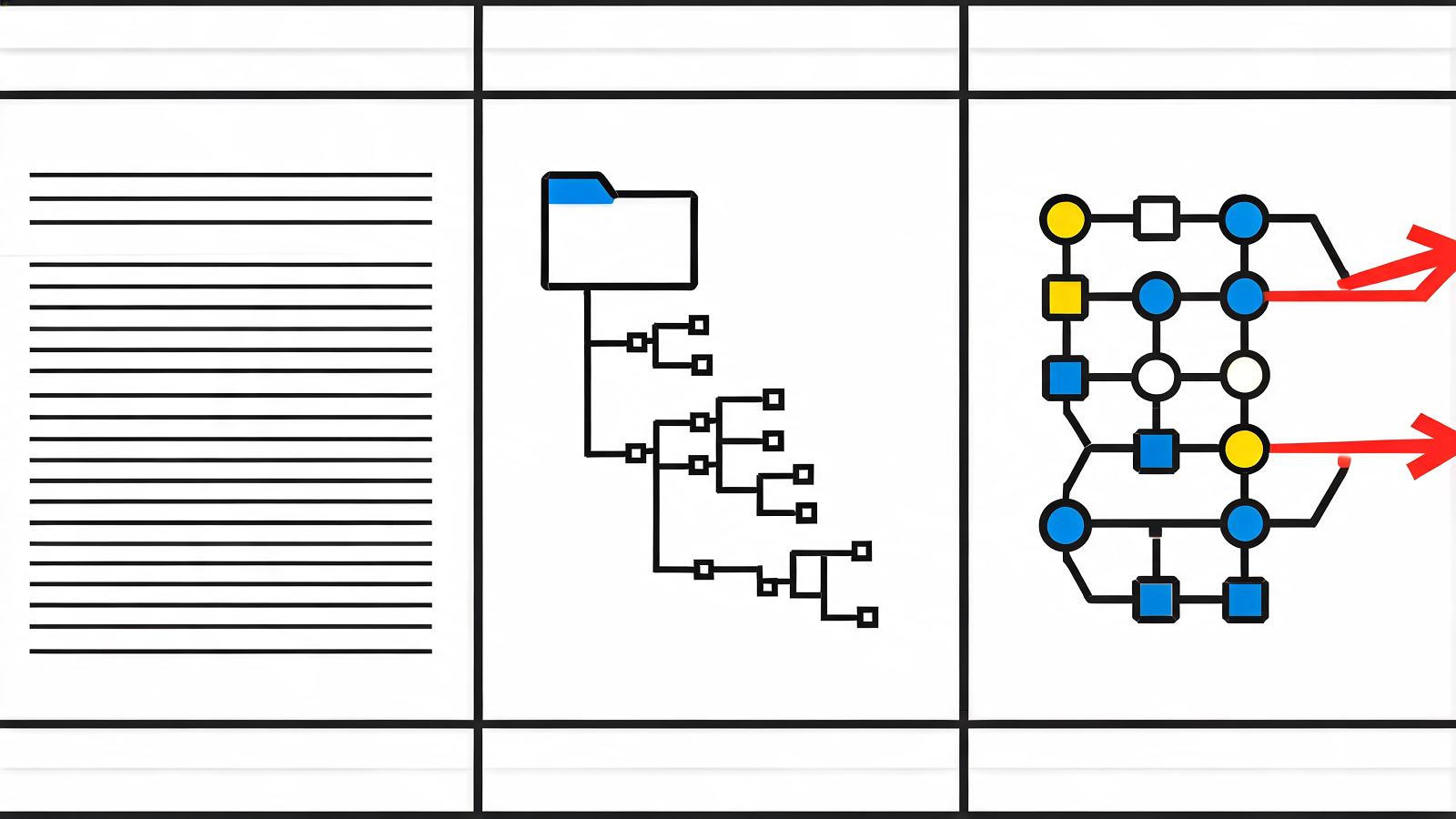
Start from the verb. llms.txt describes: it hands a reader a curated map of what a site contains. AGENTS.md instructs: it sits at a repository root and tells a coding agent how to work inside that codebase. WebMCP acts: a page registers its own JavaScript functions as tools, with schemas, and an agent calls them. Describe, instruct, act. Almost every confused recommendation in circulation collapses two of those verbs into one, and the three source documents are unambiguous once you read them side by side instead of through a vendor summary. So which agentic discovery standard do you actually need? The answer turns on one question: does your business publish content, ship code, or expose actions? Most publish content only. Very few need all three, and the publishing order matters more than the count.
Key takeaways:
- llms.txt is a curation format published on 3 September 2024 by Jeremy Howard, served from a site root, whose only required section is an H1 carrying the project name.
- AGENTS.md is a repository file, used by over 60,000 open-source projects and stewarded by the Agentic AI Foundation under the Linux Foundation since 9 December 2025.
- WebMCP is a Draft Community Group Report dated 28 July 2026, explicitly not a W3C Standard, testable through a Chrome origin trial that opened in Chrome 149.
- Ahrefs studied 137,210 domains in May 2026 and found that 97% of llms.txt files received zero traffic that month.
- Shopify serves /agents.md as the primary storefront discovery file, a platform decision dated 28 May 2026, not a pattern to copy onto a marketing site.
Three Verbs, Three Artefacts, One Persistent Confusion
The three conventions differ on three axes that decide everything: where the artefact lives, who reads it, and who governs it. Collapse one of those axes and the recommendation that follows will be wrong.
| Convention | Artefact location | Who reads it | Governing body |
|---|---|---|---|
| llms.txt | /llms.txt at a website root | Answer engines and AI crawlers reading site content | None. A proposal by Jeremy Howard, September 2024 |
| AGENTS.md | AGENTS.md at a code repository root | AI coding agents working inside a checkout | Agentic AI Foundation, under the Linux Foundation |
| WebMCP | JavaScript executing inside the page | Browser-resident agents that call page tools | Web Machine Learning Community Group at the W3C |
Two of the three are files a publisher writes; the third is code a developer ships. One is read by crawlers on the open web, one by an agent inside a code checkout, and one by an agent inside the user's browser session. Only one of the three has no governing body at all.
The llms.txt proposal states its purpose narrowly: it exists to "provide information to help LLMs use a website at inference time". Jeremy Howard's original specification places the file "in the root path /llms.txt of a website (or, optionally, in a subpath)" and fixes a strict section order: an optional byte-order mark, an H1 with the project name, a blockquote summary, free markdown sections, then H2-delimited file lists. The H1 is the only required section. Nothing in the format instructs an agent to do anything. It describes, and that single verb already narrows which agentic discovery standard do you actually need.
AGENTS.md Is a Repository File, and Its Own Site Says So
AGENTS.md calls itself "a README for agents: a dedicated, predictable place to provide the context and instructions", and it is unambiguous about placement: "Create an AGENTS.md file at the root of the repository." For monorepos, the instruction is to "Place another AGENTS.md inside each package", because agents "automatically read the nearest file in the directory tree, so the closest one takes precedence". Explicit user chat prompts override everything.
Every element of that design assumes a filesystem the agent has checked out. Nesting and precedence only mean something when there is a directory tree to walk. The format carries no schema and no required fields, because its reader is a coding agent parsing prose instructions, not a crawler filling a structured index.
This is where ecommerce guidance in wide circulation goes wrong. Advice to publish AGENTS.md at a public web root, describing catalogue search and checkout approval, extends the convention past everything its own specification documents. No published study demonstrates that a production agent fetches AGENTS.md from a web root rather than from a git repository, which leaves that recommendation untested and most likely a category error. The cleanest way to see the division of labour is to compare four machine-readable files and the job each one does before writing any of them.
Who Actually Reads AGENTS.md, and Through Which Tools
Adoption is the strongest argument for AGENTS.md, and it sits entirely inside the developer toolchain. The format reports use by over 60,000 open-source projects, and every tool listed as a consumer is a coding agent: Codex from OpenAI, Jules and Gemini CLI from Google, Cursor, Aider, goose, Zed, Warp, Devin and Windsurf from Cognition, Junie from JetBrains, the GitHub Copilot coding agent, and VS Code.
Governance moved in December 2025. The Linux Foundation announced the Agentic AI Foundation on 9 December 2025, anchored by three contributed projects: Model Context Protocol from Anthropic, goose from Block, and AGENTS.md from OpenAI. Jim Zemlin, Executive Director of The Linux Foundation, framed the rationale plainly: "We are seeing AI enter a new phase, as conversational systems shift to autonomous agents that can work together." Eight companies joined at platinum level: Amazon Web Services, Anthropic, Block, Bloomberg, Cloudflare, Google, Microsoft and OpenAI.
Nothing in that list is a marketing platform, an answer engine, or a web crawler. The reader of AGENTS.md is a program with a working directory.
WebMCP Turns Page Functions Into Callable Tools
WebMCP is the only one of the three that lets an agent do something rather than read something. Its explainer describes it as letting developers "expose web application functionality, either JavaScript functions or HTML <form> elements, as 'tools' with natural language descriptions and structured schemas". A page declares what it can do, and an agent invokes it directly instead of screenshotting the DOM and guessing at click targets.
The current API surface is document.modelContext. The Draft Community Group Report dated 28 July 2026 specifies registration as registerTool(ModelContextTool tool, optional ModelContextRegisterToolOptions options = {}):
await document.modelContext.registerTool({
  name: "add-todo",
  description: "Add a new item to the user's active todo list",
  inputSchema: { /* JSON Schema for the arguments */ },
  async execute({ text }) { /* your existing application logic */ }
});
Unregistration is not a separate method. The registration options accept an AbortSignal that unregisters the tool when aborted, which ties tool lifetime to whatever already governs the component's lifetime. For plain forms there is a declarative path: the browser synthesizes tool definitions from <form> elements with no imperative registration at all.
Two caveats matter before anyone commits a quarter to this. The specification states outright that it "is not a W3C Standard nor is it on the W3C Standards Track". And availability is an origin trial, not a shipped platform feature: Chrome for Developers announced on 9 June 2026 that "in Chrome 149, you can sign up for the WebMCP origin trial". Draft status is the decisive input when you ask which agentic discovery standard do you actually need this quarter rather than next year, and what Chrome checks for WebMCP is the audit to read alongside it.
How WebMCP Relates to MCP Without Inheriting It
Model Context Protocol (MCP) is "an open-source standard for connecting AI applications to external systems", documented with a deliberately plain analogy: "Think of MCP like a USB-C port for AI applications." It connects a client to servers exposing data sources, tools and workflows, and it is supported across Claude, ChatGPT, VS Code and Cursor.
WebMCP borrows the vocabulary and refuses the plumbing. Its explainer is precise: WebMCP "derives direct inspiration and shares a common vocabulary with MCP (e.g., tools, schemas, parameters), but provides a form-fitting, client-safe solution designed natively for the web platform". Tools, schemas and parameters carry over. The transport, the server process and the credential model do not.
That distinction carries an operational consequence. An MCP server is infrastructure you host, authenticate and monitor, with its own deployment and its own audit trail. A WebMCP tool is a function already running inside a page the user has signed into, so its security posture is inherited from the browser session rather than rebuilt. The two are therefore not substitutes: if a capability has to be reachable by an agent with no browser, no amount of tool registration in the page will expose it.

The Shopify Case Is a Platform Decision, Not a Pattern
Shopify is the exception people cite, and it proves the rule rather than breaking it. The Shopify developer changelog dated 28 May 2026 confirms that every storefront serves three routes, /agents.md, /llms.txt and /llms-full.txt, each overridable through a Liquid template: templates/agents.md.liquid, templates/llms.txt.liquid and templates/llms-full.txt.liquid. The fallback chain is documented: "If no template is present for a given path, it falls back to your agents.md template, then to the Shopify-generated default."
Merchants met the switch before the changelog explained it. On 20 May 2026 a merchant reported in the Shopify Developer Community Forums that llms.txt and llms-full.txt had begun redirecting to agents.md overnight. Liam, posting as Shopify staff, confirmed the behaviour was intended: "Shopify now uses /agents.md as the primary storefront discovery file for agentic and AI experiences, so /llms.txt is no longer the right place to customize."
Read that carefully. Shopify did not discover that AGENTS.md belongs at a web root. Shopify decided that on its own platform, for its own agentic commerce surface, one filename would be canonical, and it holds enough leverage to make that decision stick across millions of storefronts. Shopify also joined the Agentic AI Foundation at gold level, which puts it inside the governance of the format it repurposed. Your marketing site is not, so a platform default answers which agentic discovery standard do you actually need on a managed storefront while leaving you only the contents to choose. The mechanics of taking control of those routes are covered in the Shopify agents.md route.
Which Agentic Discovery Standard Do You Actually Need, by Business Shape
Pick by what your business is, not by what is newest. Six shapes cover almost every case.
- Content and marketing sites, including agencies and consultancies. llms.txt only. There is no repository for an agent to check out and no action to expose. Curate the twenty to forty URLs that actually explain the business.
- Documentation sites and developer products. llms.txt, generated for you. Docs hosts emit the file automatically from the docs tree, the one context where automatic generation produces the right answer.
- Open-source projects and any codebase an agent will edit. AGENTS.md at the repository root, plus nested files per package in a monorepo. This is the file's designed use, and 60,000 projects are the evidence.
- Commerce storefronts on a managed platform. Whatever the platform serves, overridden. On Shopify that means editing
templates/agents.md.liquidrather than arguing with the redirect. - Web applications with a real task surface, such as booking, configuring or filing. WebMCP, behind the origin trial, and only once llms.txt exists. An agent that cannot find your site will never call your tools.
- Businesses that both publish and ship software. All three, in that order: llms.txt first because it is read today, AGENTS.md in the repositories because it changes agent behaviour today, WebMCP last because it is a draft.
Set expectations honestly on the first of those shapes. Louise Linehan, Content Marketer at Ahrefs, published a study on 15 June 2026 covering 137,210 domains that received traffic in May 2026, and found that 97% of llms.txt files got zero traffic in that month. Nothing fetched them at all. Among the files that were fetched, 96% of requests came from bots, with GPTBot accounting for 4.51% and statespace-indexer for 3.52%, and training crawlers pulled the file nearly five times more often than retrieval bots did. That measurement is not an argument against publishing one, because a file nobody fetched this month costs nothing to serve next month. It is an argument against expecting a text file to move revenue on its own, and it changes what to expect from the file rather than which agentic discovery standard do you actually need.
FAQ: Which Agentic Discovery Standard Do You Actually Need
For a pure content site, which agentic discovery standard do you actually need?
llms.txt, and nothing else. AGENTS.md is specified for a repository root and read by coding agents, so a content site has no reader for it. WebMCP registers JavaScript tools that a brochure site does not have. Publish a curated llms.txt with an H1 project name, a blockquote summary, and H2 file lists pointing at the pages that explain what the business does.
Should I publish AGENTS.md at my website root?
Only if your platform already does it for you, as Shopify has since 28 May 2026. The AGENTS.md format instructs you to create the file "at the root of the repository", and every tool listed as a consumer is a coding agent working in a checkout. No published evidence shows a production agent fetching the file from a web root instead.
Is WebMCP safe to build on in production today?
Not as a stable dependency. The specification is a Draft Community Group Report dated 28 July 2026 and states that it "is not a W3C Standard nor is it on the W3C Standards Track". Chrome exposure runs as an origin trial from Chrome 149, announced on 9 June 2026. Build a prototype, keep the fallback path, and never remove the human-usable interface.
Does WebMCP replace an MCP server?
No. Model Context Protocol connects an AI application to systems you host and authenticate. WebMCP registers tools inside a page the user is already signed into, sharing the vocabulary of tools, schemas and parameters without the transport or server model. If your capability must be reachable without a browser, you still need an MCP server.
Who governs these three formats?
AGENTS.md is stewarded by the Agentic AI Foundation under the Linux Foundation, announced on 9 December 2025 alongside Model Context Protocol and goose. WebMCP sits in the W3C Web Machine Learning Community Group as a community draft. llms.txt has no governing body at all: it remains a proposal published by Jeremy Howard on 3 September 2024.
How La Boétie Ships the Agent-Facing Layer
La Boétie treats the agent-facing surface as infrastructure the client owns, not a marketing add-on. Most clients arrive asking which agentic discovery standard do you actually need and leave with one curated file. Three pieces of that work are separable, and most businesses only need the first.
Curation before generation. Default generators mirror a sitemap and say nothing about what the business is or who it serves. The La Boétie llms.txt Generator produces a curated file end to end, self serve, one run priced at $25 or 20 € in July 2026, with no account and no call. Read the four surfaces and their jobs first if you want the whole map before spending anything.
Repository instructions where they belong. For clients whose codebases the studio builds or inherits, AGENTS.md goes at the repository root, with nested files per package, matching the precedence rule the format documents rather than a rule invented for the occasion.
Action surfaces last. A team of five to six engineers, working across shipped client platforms including france-epargne.fr and assurecompare.fr, prototypes WebMCP tools only where a real task surface exists and the fallback interface survives the experiment.
Ownership is the constant across all three. Whatever gets built belongs to the client, with no vendor lock-in anywhere in the stack.
Conclusion
Describe, instruct, act. Three verbs, three artefacts, three readers, and three different answers to the question of who governs them. llms.txt describes a site to answer engines from its root and answers to nobody. AGENTS.md instructs coding agents from a repository root and is stewarded under the Linux Foundation. WebMCP lets a page expose callable tools through document.modelContext, and remains a Draft Community Group Report dated 28 July 2026 behind a Chrome origin trial.
Almost every bad recommendation in circulation comes from collapsing two of those verbs into one. So when someone tells you to publish all three files this quarter, ask what each one is for, then answer the only question that matters: which agentic discovery standard do you actually need for the business you actually run? For most businesses, today, the answer is one curated file at the root and the discipline to keep it honest.
Sources
Also worth reading:
- The agent-facing layer of a website, and who is already reading it
- Four machine-readable files and the job each one does
- Chrome now scores your site for agents, here is what it checks
- Shopify serves agents.md now, here is how to override the defaults
External references:
- AGENTS.md : Agentic AI Foundation, 2026
- The /llms.txt file : Jeremy Howard, 2024
- WebMCP Draft Community Group Report : Web Machine Learning Community Group, 2026
- WebMCP explainer repository : GitHub, 2026
- What is the Model Context Protocol? : MCP documentation, 2026
- Formation of the Agentic AI Foundation : The Linux Foundation, 2025
- Customize /llms.txt, /llms-full.txt and /agents.md : Shopify, 2026
- Llms.txt and agents.md, Agentic Commerce : Shopify Developer Community Forums, 2026
- 97% of llms.txt files never get read : Ahrefs, 2026
- Join the WebMCP origin trial : Chrome for Developers, 2026
Questions
For a pure content site, which agentic discovery standard do you actually need?
llms.txt, and nothing else. AGENTS.md is specified for a repository root and read by coding agents, so a content site has no reader for it. WebMCP registers JavaScript tools that a brochure site does not have. Publish a curated llms.txt with an H1 project name, a blockquote summary, and H2 file lists pointing at the pages that explain what the business does.
Should I publish AGENTS.md at my website root?
Only if your platform already does it for you, as Shopify has since 28 May 2026. The AGENTS.md format instructs you to create the file "at the root of the repository", and every tool listed as a consumer is a coding agent working in a checkout. No published evidence shows a production agent fetching the file from a web root instead.
Is WebMCP safe to build on in production today?
Not as a stable dependency. The specification is a Draft Community Group Report dated 28 July 2026 and states that it "is not a W3C Standard nor is it on the W3C Standards Track". Chrome exposure runs as an origin trial from Chrome 149, announced on 9 June 2026. Build a prototype, keep the fallback path, and never remove the human-usable interface.
Does WebMCP replace an MCP server?
No. Model Context Protocol connects an AI application to systems you host and authenticate. WebMCP registers tools inside a page the user is already signed into, sharing the vocabulary of tools, schemas and parameters without the transport or server model. If your capability must be reachable without a browser, you still need an MCP server.
Who governs these three formats?
AGENTS.md is stewarded by the Agentic AI Foundation under the Linux Foundation, announced on 9 December 2025 alongside Model Context Protocol and goose. WebMCP sits in the W3C Web Machine Learning Community Group as a community draft. llms.txt has no governing body at all: it remains a proposal published by Jeremy Howard on 3 September 2024.