Mastering Venture Studio and Equity-for-Tech, the Complete Guide for Operators
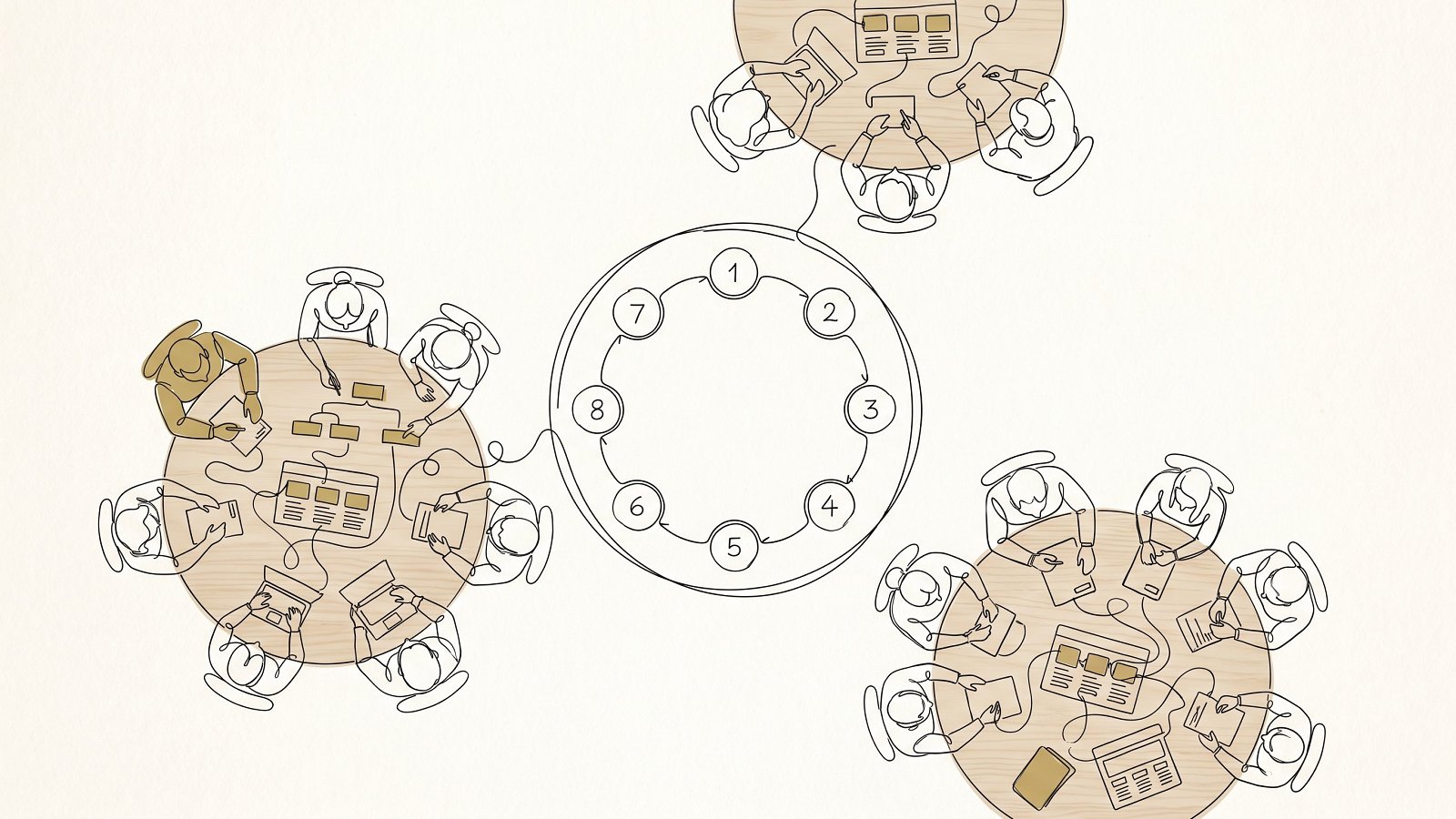
8 themes
8 published, the rest in preparation.
- Inside What is a Venture Studio, the Complete Guide for OperatorsA complete operator-grade guide to venture studio fundamentals: definitions, La Boétie's house position, the full sub-topic map, track record benchmarks, side-by-side comparisons with accelerators and incubators, and the decision criteria for picking which focal article to read first.Read the guide
- Inside the equity for tech deal model, the complete guide for operatorsAn equity for tech deal swaps cash invoices for cap-table ownership. Studio-born companies post a 60 percent net IRR (GSSN, 2024), hit seed in 10.6 months, and clear Series A in another 14.5. This pillar maps the full hub: benchmarks, negotiation, due diligence, and engagements.Read the guide
- Build operate transfer engagement: the complete guide for operatorsAn opinionated pillar on the build operate transfer engagement: what it is, how it actually unfolds, where it breaks, how it compares to managed services and inhouse hiring, and the decision rule La Boétie uses with Series-A operators scaling engineering from eight to thirty in eighteen months.Read the guide
- Inside Studio versus accelerator versus VC, the complete guide for operatorsStudio versus accelerator versus VC is the first question every operator has to settle before signing a term sheet. This pillar maps the full hub: definitions, dated benchmarks, the studio's house position, three engagements where the playbook paid off, and a decision rule you can use this week.Read the guide
- Inside Founder equity and vesting, the complete guide for operatorsFounder equity vesting decides who keeps shares when a co-founder walks. This pillar maps the 4-year and 1-year cliff standard, 83(b) tax math, double-trigger acceleration, Carta 2026 benchmarks, European leaver provisions, and La Boétie's house position for operators.Read the guide
- Inside co founder as a service, the complete guide for operatorsCo founder as a service is a fixed term partnership where a senior technical team operates as your co-founder, builds the product, and hands ownership back on a published schedule. This pillar maps the whole hub, gives the studio's opinionated decision rules, and points to the engagement that fits your starting condition.Read the guide
- Inside studio portfolio economics: the operator playbookStudio portfolio economics is the discipline that decides whether a venture studio creates real wealth or quietly burns capital across a portfolio that never compounds. A studio carries the operational cost of building companies from scratch, holds 30 to 60% equity at incorporation, and recovers overhead only when a share of its portfolio reaches Series A or exit.Read the guide
- Inside IP transfer and contractual frameworks, the complete guide for operatorsAn ip transfer agreement studio engagement turns a fragile build into a clean chain of title. This pillar maps the hub, the studio's house position, and where to start by starting condition.Read the guide
Most founders who land in studio talks have already burned a month on a Lovable or Claude Code prototype that went sideways the moment a real user touched it. The venture studio operating model overview maps the alternative: a company-builder firm that originates the idea, validates it, ships the first product, recruits the founding team, and takes a meaningful equity position at incorporation in exchange for that work. This pillar is the umbrella read for the founder who needs the entire territory in one sitting before drilling into specific deal mechanics. Each section links into a hub-pillar where the math, the contracts, and the playbooks live in detail. The headline figure to anchor on: studio-built companies post a 53% net internal rate of return against 21.3% for traditional VC-backed startups, with median time from zero to Series A compressed from 56 months to 25.2 months (Inniches Big Venture Studio Research 2024).
Key takeaways.
- Studios take 30% to 60% of common stock at founding, against 10% to 20% per round for a seed venture capital fund and 5% to 15% for an accelerator, in exchange for co-founding work the founder would otherwise hire.
- 84% of studio-built companies raise a seed round and 72% reach Series A, against 42% for traditionally founded startups, per the Global Startup Studio Network cohort tracked by Inniches.
- Build, Operate, and Transfer phases run 30 to 90 days, 12 to 24 months, and 60 to 90 days respectively. 50% of global companies running offshore engineering centres now use a build operate transfer engagement variant.
- Y Combinator's standard offer is $125,000 for 7% on a post-money safe plus $375,000 on an uncapped MFN safe, totalling $500,000 per company, against a 0.6% acceptance rate in Summer 2025.
- Antler has backed more than 1,800 startups across 27 cities; Founders Factory reports 450+ portfolio companies with 60+ operators across five continents (Founders Factory).
Why the venture studio operating model overview matters now
A venture studio is a company-builder firm that originates ideas, validates them in-market, builds the first product, recruits the founding team, and takes meaningful equity at incorporation in exchange for that work. The venture studio operating model overview that this guide unpacks ties three things into one machine: a legal entity (the studio), an operating team of engineers, designers, growth and finance and legal staff, and a capital base that writes cheques (sometimes a separate fund). This is what differentiates the model from a venture capital firm, which supplies cheques but not founders, and from an accelerator, which supplies curriculum and capital but does not own the build.
The category has compounded fast. Inniches catalogued 1,107 active studios in 2024, up 625% over the previous seven years, split into 60% traditional venture studios, 30% hybrid models, and 10% corporate venture builders. The traction is not vanity. Anderson and Gomez (2023) measured a net internal rate of return (IRR) of 60% across studio cohorts. The same data set put the pooled IRR for traditional VC-backed companies at 21.3%. Two systems that look comparable on a slide produce returns three times apart at scale.
Why does the venture studio operating model overview matter now in 2026? Three pressures converge. Generative AI has made it cheap to ship a credible prototype in a weekend, which floods the market with founders who have a working demo and no architecture, and who pay for it in the first incident. Capital is more selective: Y Combinator's Summer 2025 batch ran a 0.6% acceptance rate (per the We Are Founders 2026 review of YC batch data) and Tier 1 venture capital firms now want a metric a non-studio founder rarely has at pre-seed. Corporate balance sheets are pulling venture-building back from external venture units to studios, because 50% of global companies running offshore engineering centres now use a build operate transfer engagement or a BOT-T variant for the speed and the cleaner exit. The venture studio operating model overview answers all three pressures at once.
Where the venture studio operating model overview falls short is when the founder's idea is already well validated, the team is technical, and the only missing input is capital. In that profile, the founder pays studio dilution for inputs they no longer need. We say so plainly because the goal of this pillar is to help you decide, not to win you as a client.
The eight hubs that compose the venture studio operating model overview
The territory breaks into eight hubs. Each one is a hub-pillar in this knowledge base, with its own playbook, contracts, and worked examples. Treat the list below as a numbered map: read the hubs in order if you are new to the model, jump to the one that matches your starting condition if you already know the basics.
- Venture studio fundamentals. Definitions, the operating chassis, why the model exists, who built it. Start here if the term is new. See What is a venture studio pillar for the deep version.
- Equity-for-tech deals. The legal and economic mechanics of swapping engineering and product work for common stock. The wedge that makes the studio model run. See Equity-for-tech deals pillar for the negotiation playbook.
- Build-operate-transfer engagements. The three-phase model that lets a corporate parent or a funded founder rent the studio's operating team for 12 to 24 months, then transfer the people and the IP onto its own books. See Build-operate-transfer engagements pillar.
- Studio versus accelerator versus VC. A side-by-side comparison of the three vehicles a founder is likely to choose between, with the dilution, support, and timeline numbers the founder needs to defend the choice in a board meeting. See Studio versus accelerator versus VC pillar.
- Founder equity and vesting. Cap-table math at incorporation, the cliff-and-vest schedule that protects all parties, dilution paths through pre-seed, seed, and Series A. See Founder equity and vesting pillar.
- Co-founder as a service. A lighter version of the studio engagement where the studio supplies a single co-founder (typically the technical one) without taking the full studio stake. See Co-founder as a service pillar.
- Studio economics and portfolio mechanics. How a studio funds itself, how the cohort math compounds, what the J-curve looks like, why portfolio diversification at the studio level beats single-bet exposure. See Studio economics and portfolio mechanics pillar.
- IP transfer and contractual frameworks. What gets assigned, what gets licensed, who owns improvements, how reversion clauses work, the standard spinout shape. See IP transfer and contractual frameworks pillar.
Three cross-hub themes show up at every engagement. First, client ownership is non-negotiable: the studio that refuses to assign IP cleanly at the end of the build does not deserve the engagement. Second, the founder must keep operational majority at incorporation: anything below 51% of voting common stock at the moment of formation creates a governance problem the cap table cannot resolve later. Third, the studio's reusable operating chassis is the real asset, meaning the legal templates, the hiring funnel, the design system, the infrastructure-as-code, the analytics stack. A studio without that chassis is a consultancy with stock options.
Equity for tech deal mechanics, the wedge between cash invoices and cap-table positions
An equity for tech deal is a structured arrangement where a studio (or a fractional engineering team) provides design, engineering, and product work in exchange for common stock at incorporation, instead of cash invoices. The deal's value rests on three numbers: the studio's hourly cost basis (typically $150 to $300 per blended engineering hour for top-tier teams), the percentage of common stock granted, and the vesting schedule. Get any of the three wrong and the cap table breaks at the next financing round.
The American Bar Association's 2024 primer on cap-table math notes that unusual equity agreements that outline what is essentially payment for time almost always cause problems when trying to close a round (American Bar Association, 2024). Investors interrogate two questions when they see a studio entry on the cap table: did the studio actually do the work that justifies the stake, and is the work going to keep going after incorporation. The answer to both should be visible in the deal's documentation: a statement of work attached to the equity grant, and a follow-on services agreement priced in cash if the company wants more from the studio post-funding.
The modal grant for a full equity for tech deal is 20% to 35% of common stock, on a 4-year vest with a 1-year cliff. The lower end (20%) is appropriate when the studio is shipping only the technical build and the founder is supplying the idea, the customer development, and the first commercial hires. The upper end (35%) is appropriate when the studio supplied the idea and is co-founding alongside the founder. Above 35%, the deal starts looking like a full venture studio engagement, where the studio takes 30% to 60% as documented in the venture studio operating model overview itself.
A clean equity for tech deal also defines what happens if either side walks. Reverse vesting is the default: the studio's stock vests over time, and unvested shares revert to the company if the engagement ends early. Acceleration on change of control is contentious; the founder usually wants single-trigger acceleration (acquisition vests everything), the studio usually wants double-trigger (acquisition plus involuntary termination). The modal compromise is double-trigger with a 50% acceleration on the trigger event.
Pricing the deal in expected dollars beats pricing in equity percentage. A studio that quotes 25% on a $5M post-money seed is asking for $1.25M of value. The same studio quoting 25% on a pre-seed company that will price at $20M post-money in twelve months is asking for $5M. The founder who only thinks in percentages walks into the second deal without realising they overpaid by 4x for the same work. See Equity for tech deal negotiation walkthrough for the worked example, and treat that walkthrough as required reading before any binding term sheet.
Build operate transfer engagement phases, the bridge from external team to in-house ownership
A build operate transfer engagement (often shortened to BOT) is a three-phase model where an external partner first builds a capability, then operates it for a defined period, and finally transfers the people, the assets, and the IP to the client. Inside the venture studio operating model overview, build operate transfer is the path of choice for funded founders and corporate parents who want speed and risk transfer up front, then full ownership by year three.
The three phases run on these durations:
- Build phase, 30 to 90 days. Charter, architecture, hiring plan, infrastructure standup, the first three to five hires, the first product increment shipped to a closed beta. The Build phase is where most of the studio's reusable chassis pays back: a Build phase that takes 90 days at a mature studio takes nine months at a first-time corporate venture unit.
- Operate phase, 12 to 24 months. The team scales (typically to 8 to 25 people), the product ships to general availability, instrumentation goes in, the operating margin model becomes legible, and follow-on capital is raised. 44% of brands using BOT report improved time to market and 45% report shorter development cycles, per the Build-Operate-Transfer 2025 industry guide (BOT 2025 guide).
- Transfer phase, 60 to 90 days. Documentation, knowledge transfer, employment-novation paperwork, IP assignment, payroll cutover, infrastructure handover. Transfer is the riskiest of the three phases because it surfaces every documentation gap accumulated during Operate. Many engagements that succeed during Operate stumble during Transfer due to inadequate planning, documentation gaps, or key-employee departures. Plan Transfer in week one of Build, not week one of Transfer.
Cost economics in 2026: the build operate transfer engagement typically delivers 40% to 60% cost savings against onshore development, and 20% to 30% lower long-term costs than traditional outsourcing. The first 12 to 18 months often cost more than alternatives due to setup and management fees. The ROI becomes compelling in year two, after the Transfer is complete. 50% of global companies are already using BOT or BOT-T models for their global engineering centres, with over 70% seriously considering it.
The corporate-parent variant of BOT inside the venture studio operating model overview adds a fourth dynamic. The studio originates and operates the venture as if it were an independent startup, then transfers it back to the corporate parent at the end of Operate. The corporate buys speed (12 to 24 months versus 36 to 48 for an internal build) and ringfences the early-stage risk in the studio's balance sheet. The trade-off is dilution: the studio keeps a 15% to 30% stake post-transfer, in exchange for the operating risk it absorbed. See Build operate transfer engagement phase walkthrough for the four-quarter operating cadence and the diligence checklist.
Studio versus accelerator versus VC, picking the partner for your starting condition
Founders who get this comparison wrong overpay in dilution by 15 to 25 points. The wrong frame is to compare on equity percentage; the right frame is to compare on what each model supplies and what it withholds. The table below collapses the three vehicles into the four dimensions a founder should weigh.
| Dimension | Venture studio | Accelerator | Venture capital |
|---|---|---|---|
| Equity taken | 30% to 60% at founding | 5% to 15% per programme | 10% to 20% per round |
| Cash committed | $0 to $500K direct, plus the value of the build | $125K to $500K (YC: $500K total) | $1M to $20M at seed; $5M to $50M at Series A |
| Operational support | Co-founder team for 12 to 24 months | 12-week intensive plus alumni network | Board seat, intros, follow-on capital |
| Best fit | Founder with a market thesis but no technical co-founder, no team, no infrastructure | Founder with a working team and a product needing distribution and capital | Founder with traction (revenue, users, retention) and an articulated growth thesis |
Two patterns to read off this table. First, the studio is the only model that supplies founders, not just capital. If your gap is a technical co-founder or a full operating team, the accelerator and the venture capital fund will not close it. Second, VC equity is per round, studio equity is once at founding. A founder who raises three rounds before exit gives a venture capital fund 30% to 60% over the life of the company, the same band as the studio's one-time take. The studio just front-loads the dilution; the venture capital fund stretches it out.
Y Combinator's standard offer ($125,000 on a post-money safe in return for 7% of your company plus $375,000 on an uncapped safe with a Most Favored Nation provision, totalling $500,000 per company) reads on paper as accelerator economics (Y Combinator about page). In practice, YC's 0.6% acceptance rate in Summer 2025 and its requirement that the team be already complete pushes most founders toward studios or operator-run programmes. Antler positions itself between accelerator and studio: it has backed more than 1,800 startups across 27 cities with a $285M Antler Elevate fund for later-stage follow-on, and it operates a residency model where founders are paired in cohort, not pre-formed. Founders Factory operates a true studio with 450+ portfolio companies, 60+ operators, and presence on five continents, with named corporate partners including HSBC, Aviva, Northwestern Medicine, and Rio Tinto. See Studio versus accelerator versus VC operator walkthrough for the decision matrix you can actually defend in a board meeting.
Founder equity vesting, what gets diluted and what gets earned back
Once the venture studio operating model overview is the chosen path, the cap table at incorporation determines whether the company is fundable in eighteen months. Founder equity is the common stock granted to the founders at formation; vesting is the schedule that dictates how much of that stock the founder actually owns at any point in time. The default at sophisticated studios is a 4-year vest with a 1-year cliff, applied to both the founders' and the studio's stakes.
The cap-table shape at incorporation typically lands inside this band:
- Founder pool: 35% to 50% common, fully on a 4-year cliff vest.
- Studio pool: 30% to 45% common, fully on a 4-year cliff vest.
- Option pool: 10% to 15% authorised, unallocated at formation.
- Friends-and-family or SAFE pool: 0% to 10% reserved for the first money in.
Two cap-table mistakes recur. The first is dead equity, where a co-founder departs but retains 30% to 40% of common stock because vesting was not set up properly. The fix: tie all stock issuances to a vest schedule with reverse-vesting and a 1-year cliff. The second is above-market advisor grants, where the founder hands a 5% or 10% slug to an advisor in the first month, only to discover at Series A that the round will not close until the advisor's grant is renegotiated. The fix: cap advisor grants at 0.25% to 1% on the standard FAST agreement.
Dilution paths through pre-seed, seed, and Series A typically run 18% to 22% per round at well-priced rounds, 25% to 30% at over-eager rounds. A founder who starts at 40% common and walks through a pre-seed (20% dilution), a seed (22% dilution), and a Series A (20% dilution) ends Series A at 40% × 0.80 × 0.78 × 0.80 = 19.97%. A founder who started at 60% (no studio in the picture) but raised three over-priced rounds (28% dilution each) ends Series A at 60% × 0.72³ = 22.4%. The studio path, given the same execution, lands the founder within 250 basis points of the no-studio path, with the difference being absorbed by the studio's value-add during Build. The cap-table waterfall is opinionated for a reason: it forces every party to commit to long-dated alignment, which is exactly what venture-grade equity is supposed to do.
Co-founder as a service and fractional CTO economics
A founder who needs senior technical judgment but cannot afford a full chief technology officer has two unbundled options. Fractional CTO retainers run $5,000 to $15,000 per month for 0.25 to 1.5 days a week of involvement, with hourly rates of $150 to $300. A full-time CTO costs $250,000 to $500,000 all-in in the United States, including salary, equity, and benefits. The fractional path saves the company $200,000 to $400,000 in year one and lets the founder defer the full hire to Series A. Equity grants for fractional CTOs land at 0.5% to 2% on a 4-year vest with a 1-year cliff, mirroring full-time executive packages.
Co-founder as a service is the heavier engagement. Instead of contracting a senior advisor on a retainer, the studio assigns a partner-level operator (often the technical co-founder) to the venture for a defined period. The co-founder takes equity at incorporation (typically 8% to 18%) and works the venture as if it were their own, full-time, for 12 to 24 months. The studio retains a separate stake (15% to 30%) covering the operating chassis, including legal templates, infrastructure modules, design system, and hiring funnel that the co-founder leverages to ship faster.
Choose the fractional CTO path when the company has cash, a board with technical literacy, and a senior in-house engineer who needs an experienced reviewer. Choose the co-founder-as-a-service path when the company is pre-seed, has no senior technical hire, and needs an operator who will go to market with the founder. The two paths converge at Series A, where the company replaces both with a full-time CTO and the studio's roles step back to advisory. This unbundling is what makes the venture studio operating model overview accessible to founders who would otherwise have to pick between a $400K hire and a friend-of-a-friend with no real technical leadership track record.

Studio portfolio economics and why the math compounds
The IRR gap between studios and traditional venture capital is not a happy accident, it is a structural consequence of how the studio funds itself and how it allocates risk across cohort companies. Understanding the venture studio operating model overview at this layer is what separates founders who negotiate well from founders who get caught by surprise at Series A.
A traditional venture studio funds itself through three cheques. The first is the operating budget that runs the studio's permanent team, typically $1.36M median annual budget per studio with an average of $2.49M, per the Global Startup Studio Network 2022 benchmark. The second is the formation cheque written into each new venture, $476K average at GSSN-tracked studios. The third is the follow-on capital deployed into the venture's pre-seed and seed rounds. 79% of studios offer starting capital to companies they build.
Why the IRR compounds: the studio runs a portfolio of 7 to 15 vertical bets in parallel and kills the duds inside twelve months. Survivor companies (the 30% to 50% that pass the kill-or-double-down review) attract concentrated follow-on capital, both from the studio's own balance sheet and from outside seed funds that learn to trust the studio's selection. The studio's stake in each survivor is large enough (30% to 60% at founding, diluting to 12% to 25% by Series A) that a single 100x exit covers the cost basis of an entire cohort. Hexa (formerly eFounders) reports a portfolio of more than thirty SaaS companies built since 2011, including Front, Aircall, and Spendesk, several of which have crossed unicorn status.
The studio's operating chassis is the second source of compounding. Every legal template, every infrastructure module, every analytics dashboard, every hiring funnel that gets reused across ventures lowers the marginal cost of building the next one. After the third or fourth venture, the studio is shipping new companies on a fraction of the cost basis a first-time builder would face. The MIT Sloan Management Review notes that studios reuse the same operating chassis across every venture, which compresses time to first revenue from 24 to 36 months down to 6 to 12. This is the operating moat that separates a serious venture studio operating model overview from a consultancy that calls itself a studio for marketing reasons.
IP transfer agreement studio frameworks and the contractual architecture
The single contractual question that determines whether the venture studio operating model overview produces a fundable company is: at what moment does the venture own its own intellectual property. The answer should be at incorporation, with no exceptions and no carve-outs. An IP transfer agreement studio that retains licensing rights, reversion clauses tied to commercial milestones, or shared-use rights on core technology is signing the venture's death warrant at the next due-diligence cycle.
The clean shape of an IP assignment is mechanical. The studio assigns to the new company every patent, copyright, trademark, trade secret, software code, design asset, and data right created during the Build phase, on the day of incorporation. The studio retains the right to use generic, non-venture-specific reusable modules (the legal templates, the design system, the analytics chassis) under a perpetual non-exclusive licence. License agreements should clearly set out the licensed IP description, scope (exclusive or non-exclusive, territories, fields of use), and applicable license fees or royalties, per the PatentPC 2024 guidance on spinout IP strategy.
Three contract clauses commonly hide problems. Reversion clauses that return IP to the studio under conditions like missed growth targets, insolvency, or change of control to a competitor are useful as parent-protection but make the venture uninvestable for a Tier 1 venture capital fund. The fix: replace reversion with a buyback right at fair market value. Shared improvements clauses that govern who owns improvements made by the venture on top of the studio's reusable modules need clear lines: the venture owns its product code, the studio owns its chassis. Cross-licence agreements between the venture and a parent (in build operate transfer engagement variants) need explicit field-of-use restrictions and an expiration date, otherwise they create a permanent governance overhang that no investor wants to inherit.
The contractual architecture is opinionated for a reason. Founders who let the studio retain meaningful IP rights at the outset spend the next twelve months fighting their own counsel and the next investor's counsel to clean it up. The cleanest deal is the deal where, at the end of Transfer, every line of the venture's IP appears on the venture's books and the studio appears as a non-controlling shareholder, nothing more. This is the sovereignty thesis the venture studio operating model overview rests on.
Three engagements where the playbook was load-bearing
Three engagements illustrate the venture studio operating model overview where the playbook had to do real work, not just legal scaffolding. Each one is anonymised at the founder's request; the figures reflect La Boétie engagements.
A regulated insurance distributor (assurecompare.fr), multi-product line, France market, shipped over a 9-month Build with a 14-month Operate phase. La Boétie supplied the technical co-founder, the architecture, and the first three product hires. The cap table at incorporation: founder 42% common, La Boétie 32% common, option pool 14%, SAFE pool 12%. Outcome at month 16: pre-seed closed at €4.2M post-money, La Boétie diluted to 25.6% on the round.
A finance-vertical content engine (france-epargne.fr), French savings and retirement audience, shipped over a 6-month Build phase that produced a working CMS, a content pipeline, and the first 50 articles ranked in Google. The Operate phase ran 18 months and was structured as a build operate transfer engagement toward an internal team the parent eventually hired. La Boétie's stake was 28% at incorporation, retained 18% post-Transfer, and the venture reported organic traffic of more than 60,000 monthly sessions by month 14.
An auctions marketplace (llb-auction.com), niche fine-art auction house going digital after a failed DIY rebuild on Lovable. La Boétie's engagement started as a remediation contract (rebuild the platform that had shipped with exposed environment variables and unprotected admin routes) and converted to an equity for tech deal at month 3. The remediation took 14 days; the platform rebuilt under a clean architecture in 7 weeks. Equity granted: 18% common, on a 4-year vest with a 1-year cliff, in lieu of €240,000 of cash invoices.
The pattern across the three: the engagement starts with a pain point the founder has lived with for months, the studio diagnoses what is actually needed (not what the founder asked for), and the deal converts to equity once the founder has seen the studio ship under deadline. This is what we mean by the Steve Jobs spirit of partnership: clients ask for X, the team builds the right thing instead.
What is changing in 2026 and how the venture studio operating model overview is updating
Three shifts are reshaping the playbook this year. First, AI-native venture building. Y Combinator's Summer 2025 batch was 88% AI-native, and the median founding team is now 3 to 5 people instead of the larger teams of prior years. The studio's Build phase has compressed because the studio's reusable AI scaffolding (model routing layers, evaluation harnesses, agent frameworks) ships on day one. La Boétie ships every new venture with Cortex, our internal content and pipeline orchestration platform, which removes 6 to 8 weeks from the Build phase that a first-time AI builder would spend assembling tools.
Second, digital sovereignty as a deal driver. Founders and corporates increasingly refuse to build inside vendor-locked stacks where the cloud provider, the model vendor, and the analytics tool collectively own the venture's destiny. The shift is most acute in regulated sectors (finance, health, legal) and in markets where data residency is a board-level concern. The studio that can ship a venture on infrastructure the client owns, with model routing the client controls, and on a stack the client can fork, wins the engagements that vendor-locked competitors lose at the legal review.
Third, the shrinking gap between studio and operator-led VC. Operator-led seed funds are increasingly bundling studio-style operating support (talent funnels, fractional executives, design and engineering hours) on top of the cheque, eroding the studio's exclusive claim to founder-supply. The studio's defence is the operating chassis: a fund cannot replicate seven years of accumulated infrastructure, contracts, and hiring funnels in twelve months. The studios that lose to operator-led funds are the ones whose chassis was never deep to begin with.
FAQ : the venture studio operating model overview
How does the venture studio operating model overview differ from a traditional VC firm?
A venture capital firm waits for an existing team to pitch a company with traction, writes a cheque for 10% to 20% of the round, and takes a board seat. The venture studio operating model overview puts the studio team into the build at day zero: it originates the idea, validates it, ships the first product, recruits the founding executives, and takes 30% to 60% of common stock at incorporation in exchange for that work. The studio is co-founder, not investor.
What equity stake does a venture studio operating model overview typically take at founding?
Studios take between 30% and 60% of common stock at incorporation, with 35% to 45% as the modal range across the Global Startup Studio Network benchmark. The figure depends on whether the studio supplied the idea, the build, the first hires, and follow-on capital, or only a subset. A studio that ships only the technical build and lets the founder source the idea typically lands closer to the 20% to 30% band, similar to a co-founder-as-a-service engagement.
How long does a build-operate-transfer engagement take from kickoff to handover?
Plan for 16 to 30 months end to end. The Build phase runs 30 to 90 days for charter, architecture, and the first hires. The Operate phase runs 12 to 24 months and is where the system actually gets shipped, scaled, and instrumented. The Transfer phase runs 60 to 90 days, and is the riskiest of the three because documentation gaps and key-person attrition surface here. Companies that under-plan Transfer pay for the engagement twice.
What changes when the venture studio operating model overview is paired with build-operate-transfer for a corporate parent?
The studio originates and operates the venture as if it were an independent startup, then transfers it back to the corporate parent at the end of Operate. The corporate buys speed (12 to 24 months versus 36 to 48 for an internal build) and ringfences the early-stage risk in the studio's balance sheet. The trade-off is dilution: the studio keeps a 15% to 30% stake post-transfer, in exchange for the operating risk it absorbed during the Build and Operate phases.
How much should a founder pay for a fractional CTO instead of equity-for-tech?
Fractional CTO retainers run $5,000 to $15,000 per month for 0.25 to 1.5 days a week, with hourly rates of $150 to $300. Equity grants land at 0.5% to 2% on a 4-year vest with a 1-year cliff. A full-time CTO costs $250,000 to $500,000 all-in. The cash retainer fits a funded company that needs senior judgment without a full headcount; equity-for-tech fits a pre-seed company with no cash but a clean cap table.
Why do venture studios outperform traditional VC-backed startups on IRR?
Three structural reasons. Studios reuse the same operating chassis (legal templates, hiring funnels, design system, infrastructure) across every venture, which compresses time to first revenue. They run a portfolio of seven to fifteen vertical bets in parallel and kill the duds inside twelve months, so survivor companies attract concentrated follow-on capital. And the founding team is the studio team, which means execution risk is replaced by selection risk. Inniches measured a 53% net internal rate of return for studio cohorts against 21.3% for traditional VC-backed companies.
How La Boétie partners on the venture studio operating model overview
La Boétie is a flexible team of about five to six engineers who operate as venture studio, digital agency, technical consultancy, fractional CTO, equity-for-tech partner, and standard development shop, depending on the engagement. The throughline is that the client always keeps ownership of what gets built. Every line of code, every deployment artifact, every dataset is the client's at exit. We refuse to build inside vendor-locked stacks and we refuse engagements that ask us to retain meaningful IP rights post-handover. This is the sovereignty thesis the firm is named after, and it is non-negotiable.
The studio breaks its offering into three shapes that map onto the venture studio operating model overview at different stages of the founder's journey.
Equity-for-tech and full venture studio engagements. We co-found alongside founders who have a market thesis, no technical co-founder, and the appetite to ship in 12 to 16 weeks instead of 9 months. Engagements like assurecompare.fr (insurance comparator), france-epargne.fr (savings education engine), and llb-auction.com (auction marketplace) ran on this shape. Equity granted at incorporation lands in the 18% to 32% band, on a 4-year vest with a 1-year cliff. Total engagements shipped on this shape since 2022: 11.
Build-operate-transfer for funded founders and corporates. We rent the operating team, ship the system, hand it over once the in-house team is ready to absorb it. The Build phase is 6 to 12 weeks because the chassis (Cortex for content pipelines, Lynkflow for distribution, Amorphous for data, Socialforge for social) ships pre-built. The Operate phase is 9 to 18 months. The Transfer phase is 4 to 8 weeks because we plan it from week one. Median Transfer-phase duration on the last 5 engagements: 38 days.
Remediation and rebuild engagements for founders coming off a failed DIY AI build. The most common entry point in 2026: the founder has a Lovable or Claude Code prototype that shipped with exposed environment variables, unprotected admin routes, no auth boundaries, and the founder's first paying user just exposed all three at once. We rebuild it properly, in hours instead of weeks, on infrastructure the client owns. The conversation usually ends with an equity for tech deal because the founder has seen what real architecture looks like and does not want to lose it. Median time from intake call to remediated production deployment: 9 working days.
If your starting condition matches one of these three shapes, book a 30-minute studio intro call. The call is operator-to-operator, no slide deck, no sales script. We will tell you whether the venture studio operating model overview is right for you and which of our hubs to read next.
Conclusion
The venture studio operating model overview is the playbook for founders who do not need capital so much as they need co-founders, infrastructure, and a Build phase that compresses 9 months into 12 weeks. It costs 30 to 60 points of common stock at founding, against the 21.3% pooled IRR a VC-backed company earns over its life and the 53% IRR a studio cohort tends to deliver. Eight hubs map the territory: venture studio fundamentals, equity-for-tech deals, build-operate-transfer engagements, studio versus accelerator versus VC, founder equity and vesting, co-founder as a service, studio economics and portfolio mechanics, and IP transfer and contractual frameworks. Each hub is a hub-pillar in this knowledge base, with its own playbook and worked examples. Read the hub that matches your starting condition this week, then come back to this pillar to map the next move. The venture studio operating model overview rewards founders who can hold the whole territory in their head while drilling into the section that matters today.
À lire également :
- What is a venture studio operating playbook
- Equity for tech deal negotiation walkthrough (deeper than the inline)
- Build-operate-transfer phase walkthrough hub
- Studio versus accelerator versus VC hub-pillar
- Founder equity and vesting hub-pillar
- Co-founder as a service hub-pillar
- Studio economics and portfolio mechanics hub-pillar
- IP transfer and contractual frameworks hub-pillar
Sources :
- Big Venture Studio Research 2024 : Inniches, 2024
- Y Combinator about page : Y Combinator, 2025
- Antler about page : Antler, 2025
- Founders Factory homepage : Founders Factory, 2025
- Hexa eFounders studio : Hexa, 2025
- Venture Studios vs Venture Capital : Alloy Partners, 2025
- Understanding the Basics of Cap Table Math in Start-Ups : American Bar Association, 2024
- IP Strategy for Spinouts and Corporate Venture Building : PatentPC, 2024
- Is a Venture Studio Right for Your Company? : MIT Sloan Management Review, 2024
- Build-Operate-Transfer Model Complete Guide 2025 : Build-Operate-Transfer, 2025
- Y Combinator Acceptance Rate 2026 : We Are Founders, 2026
Questions
How does the venture studio operating model overview differ from a traditional VC firm?
A venture capital firm waits for an existing team to pitch a company with traction, writes a cheque for 10% to 20% of the round, and takes a board seat. The venture studio operating model overview puts the studio team into the build at day zero: it originates the idea, validates it, ships the first product, recruits the founding executives, and takes 30% to 60% of common stock at incorporation in exchange for that work. The studio is co-founder, not investor.
What equity stake does a venture studio operating model overview typically take at founding?
Studios take between 30% and 60% of common stock at incorporation, with 35% to 45% as the modal range across the GSSN benchmark. The figure depends on whether the studio supplied the idea, the build, the first hires, and follow-on capital, or only a subset. A studio that ships only the technical build and lets the founder source the idea typically lands closer to the 20% to 30% band, similar to a co-founder-as-a-service engagement.
How long does a build-operate-transfer engagement take from kickoff to handover?
Plan for 16 to 30 months end to end. The Build phase runs 30 to 90 days for charter, architecture, and the first hires. The Operate phase runs 12 to 24 months and is where the system actually gets shipped, scaled, and instrumented. The Transfer phase runs 60 to 90 days, and is the riskiest of the three because documentation gaps and key-person attrition surface here. Companies that under-plan Transfer pay for the engagement twice.
What changes when the venture studio operating model overview is paired with build-operate-transfer for a corporate parent?
The studio originates and operates the venture as if it were an independent startup, then transfers it back to the corporate parent at the end of Operate. The corporate buys speed (12 to 24 months versus 36 to 48 for an internal build) and ringfences the early-stage risk in the studio's balance sheet. The trade-off is dilution: the studio keeps a 15% to 30% stake post-transfer, in exchange for the operating risk it absorbed.
How much should a founder pay for a fractional CTO instead of equity-for-tech?
Fractional CTO retainers run $5,000 to $15,000 per month for 0.25 to 1.5 days a week, with hourly rates of $150 to $300. Equity grants land at 0.5% to 2% on a 4-year vest with a 1-year cliff. A full-time CTO costs $250,000 to $500,000 all-in. The cash retainer fits a funded company that needs senior judgment without a full headcount; equity-for-tech fits a pre-seed company with no cash but a clean cap table.
Why do venture studios outperform traditional VC-backed startups on IRR?
Three structural reasons. Studios reuse the same operating chassis (legal templates, hiring funnels, design system, infrastructure) across every venture, which compresses time to first revenue. They run a portfolio of seven to fifteen vertical bets in parallel and kill the duds inside twelve months, so survivor companies attract concentrated follow-on capital. And the founding team is the studio team, which means execution risk is replaced by selection risk. Inniches measured a 53% net IRR for studio cohorts against 21.3% for traditional VC-backed companies.